
CHINA MADE ME RETHINK AMERICA
Your Food Is Already Here
A ten-minute coffee delivery in Shenzhen made me question one of my most basic American assumptions: convenience is supposed to cost more.
Jason Woodworth-Hou

Illustration: A Meituan rider brings Starbucks to the door through China's enormous delivery network.
As I sat in my mother-in-law’s apartment, I looked around and noticed there was no coffee maker. It was another small inconvenience I was going to have to navigate for the next week.
My wife called from the other room.
“Hey hon, what kind of coffee do you want? Flat white?”
“Where from?”
“Star B.”
I started putting on my shoes.
“Where are you going?”
“To Star B. with you.”
“No, it’s delivered.”
“Whoa, no, we don’t need to do that.”
Money was already tight, and an expensive coffee with a delivery charge and a tip seemed like exactly the kind of unnecessary expense we did not need.
“It’s fine,” my partner said. “There’s no fee, and it’s cheaper.”
That stopped me.
“Cheaper than what?”
“Cheaper than going there.”
“Cheaper than going there.”
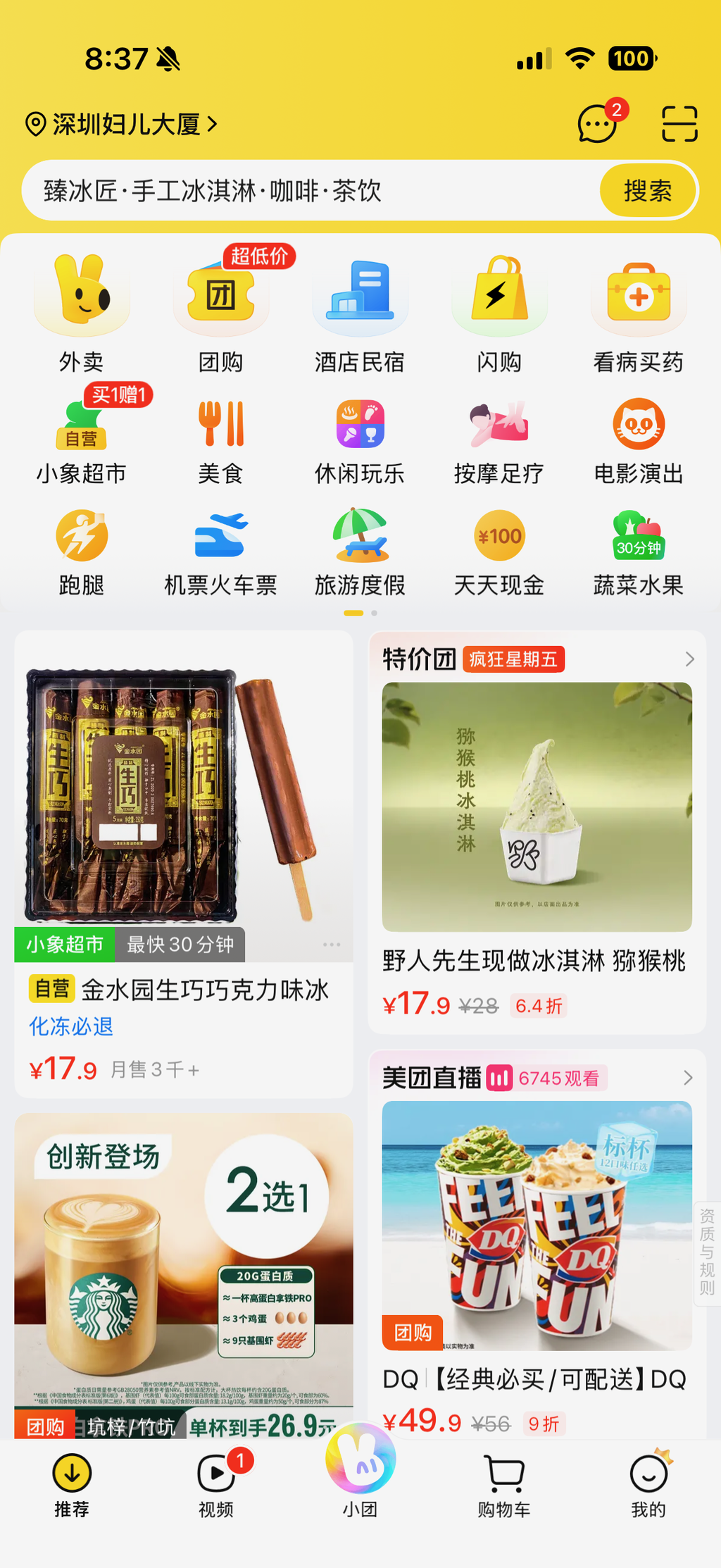
The Meituan app brings delivery, discounts, travel, groceries, and other local services into one ecosystem.
My partner was ordering through Meituan, one of China’s enormous “super apps.” Food delivery is only one part of it. You can order groceries, get discounts at restaurants, book hotels, rent bicycles, hail rides, and arrange all kinds of local services without moving very far outside the same digital ecosystem. But what caught my attention was not how many things the app could do. It was how much cheaper it seemed determined to make everything. There were coupons everywhere. Restaurant specials. Drink promotions. Buy two of these for 40 yuan. Discounts were large enough that using the app could make something substantially cheaper than simply walking into the business and paying the posted price.
There was a catch, of course. Some of the best offers were tied to locally connected Chinese phone numbers, which meant that arriving with an American phone did not necessarily give me access to the same consumer world my relatives were using. My partner, ever prepared, had a small portable Wi-Fi device that connected as a local network, which helped her get around some of that. It was one of those little reminders that visiting a country and actually knowing how to live in it are very different things. Two people can stand in the same restaurant, look at the same menu, and buy the same product while participating in completely different economies because one of them knows where the discounts are hiding.
It also explained something about my partner. She has always been the queen of discounts in the United States. It was not unusual for me to place an online order only to discover afterward that I had somehow failed to achieve the maximum discount available. Occasionally this meant returning the thing and ordering it again correctly. I used to experience this mostly as one of her personality quirks. In China it began to make more sense. If missing a discount costs you two dollars, searching for one is optional. If the difference can be 30, 40 or sometimes 50 percent, then failing to look starts to feel irresponsible. What I had understood for years as my partner being unusually obsessive about discounts suddenly looked like behavior that had been trained by a very different consumer environment.
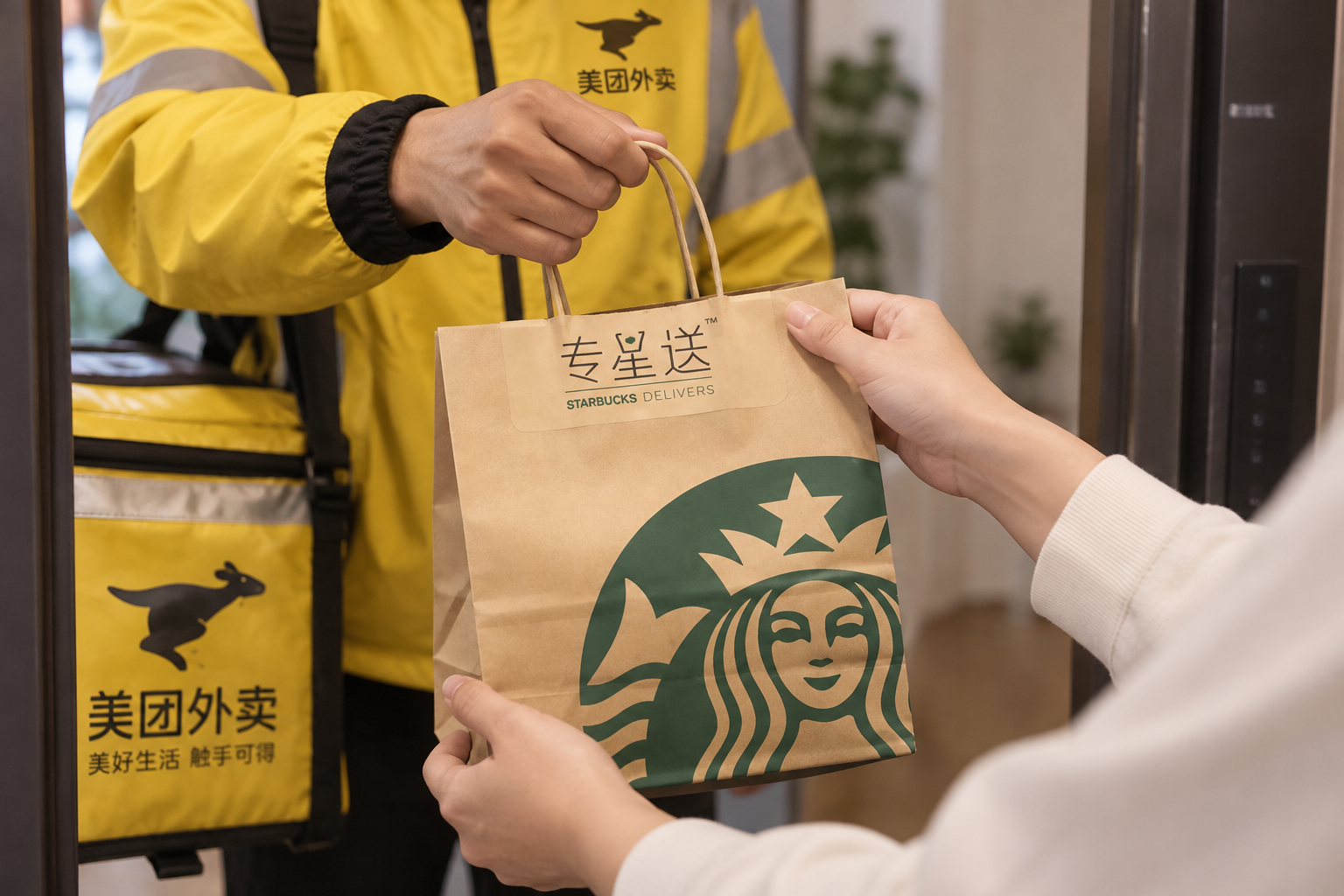
Illustration: About ten minutes after we ordered, the coffee was at the door.
And then the coffee arrived. About ten minutes after we ordered it. The store was roughly a kilometer away. Once I started looking for them, delivery riders seemed to be everywhere. Electric scooters moved constantly through traffic, stopping outside apartment buildings and restaurants. Riders jumped off, disappeared into a building, came running back out, and took off again. The whole system depended on speed. I was enjoying the convenience. They were doing the running. That mattered, because there was something about the whole transaction that still did not make sense to me.
THE COST I COULD SEE I was enjoying the convenience. They were doing the running. |

Illustration: Delivery riders were part of the constant movement of the streets.
THE EQUATION I THOUGHT I KNEW Convenience costs extra. |
I rarely use Uber Eats or DoorDash at home because I have always thought of delivery as a more expensive version of eating. There is the food, then some combination of delivery fee, service fee, and tip. The exact charges vary, but the expectation is familiar enough. Convenience costs extra. So when my partner told me that having two coffees brought to the apartment could actually make them cheaper, I felt as though somebody had reversed the equation.

Illustration: At our Beijing hotel, the delivery system continued into the elevator.
Then we reached Beijing and found another layer. Our hotel had its own delivery robot. The driver did not bring the order to our room. He met the robot in the lobby, opened a compartment in its middle, placed the food inside, and entered the information for the order. The robot handled the rest. It called the elevator, rode to our floor, rolled down the hallway and stopped outside our door, where it played a pleasant little tone announcing that our food had arrived. There was no additional charge for the robot. More surprising to me was how completely ordinary everyone seemed to find it. Nobody gathered around to watch. Nobody treated it as a technological spectacle. The robot was not there to entertain hotel guests. It was there because somebody had figured out that this was a useful thing for a robot to do.
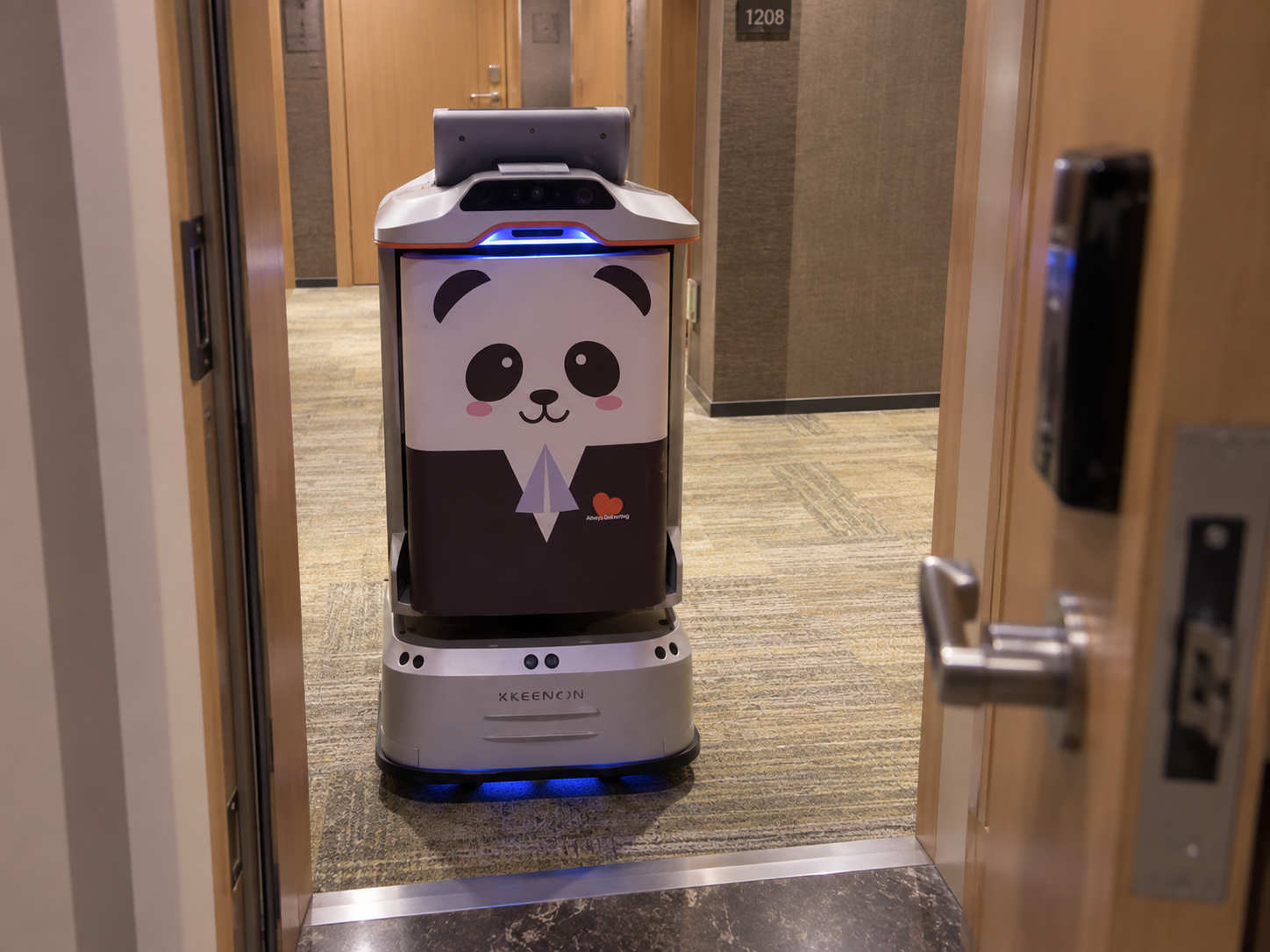
Illustration: The robot rode to our floor and stopped outside the room to announce that our order had arrived.
By then I had started wondering where all the money was coming from. Someone had to pay the delivery rider. The restaurant still needed to make money. Meituan needed to make money. The robot had to be bought and maintained. Yet the person at the end of this chain—me—was often paying less than I expected. That does not mean China discovered a way to make delivery free. Meituan operates in an intensely competitive market. Chinese platforms have spent heavily on discounts and subsidies to win customers from one another, and the recent fight among Meituan, Alibaba and JD.com became aggressive enough that regulators stepped in to cool it down. Meituan lost money during the height of that price war before returning to profit in the second quarter of 2026 as competition eased. So some of what I was experiencing was almost certainly a moment in the life of an industry rather than a permanent law of Chinese economics.
There were other costs I could see for myself. The ten-minute coffee was possible because somebody on a scooter had ten minutes to get it there. The algorithms that make these systems efficient also determine who gets which orders, how many can be stacked together, and how quickly the rider is expected to move. That speed looks different depending on whether you are standing in the apartment waiting for coffee or sitting on the scooter trying to deliver it.
But even after acknowledging that, I could not make the original experience disappear. The coffee still came in ten minutes. It was still cheaper than I expected. The robot still rolled up to my hotel room. And I knew immediately that I would behave differently if this were normal. At home, if a restaurant is a mile away, I usually just go get the food. I have already decided that the convenience of somebody bringing it to me is not worth what the final bill will become. In China, that calculation kept flipping. If using the app lowered the price and somebody could bring the thing to me in ten or fifteen minutes, then getting up, finding the place, and retrieving it myself began to feel like the less rational—and, dare I say, irrational—choice.
RACK FOCUS
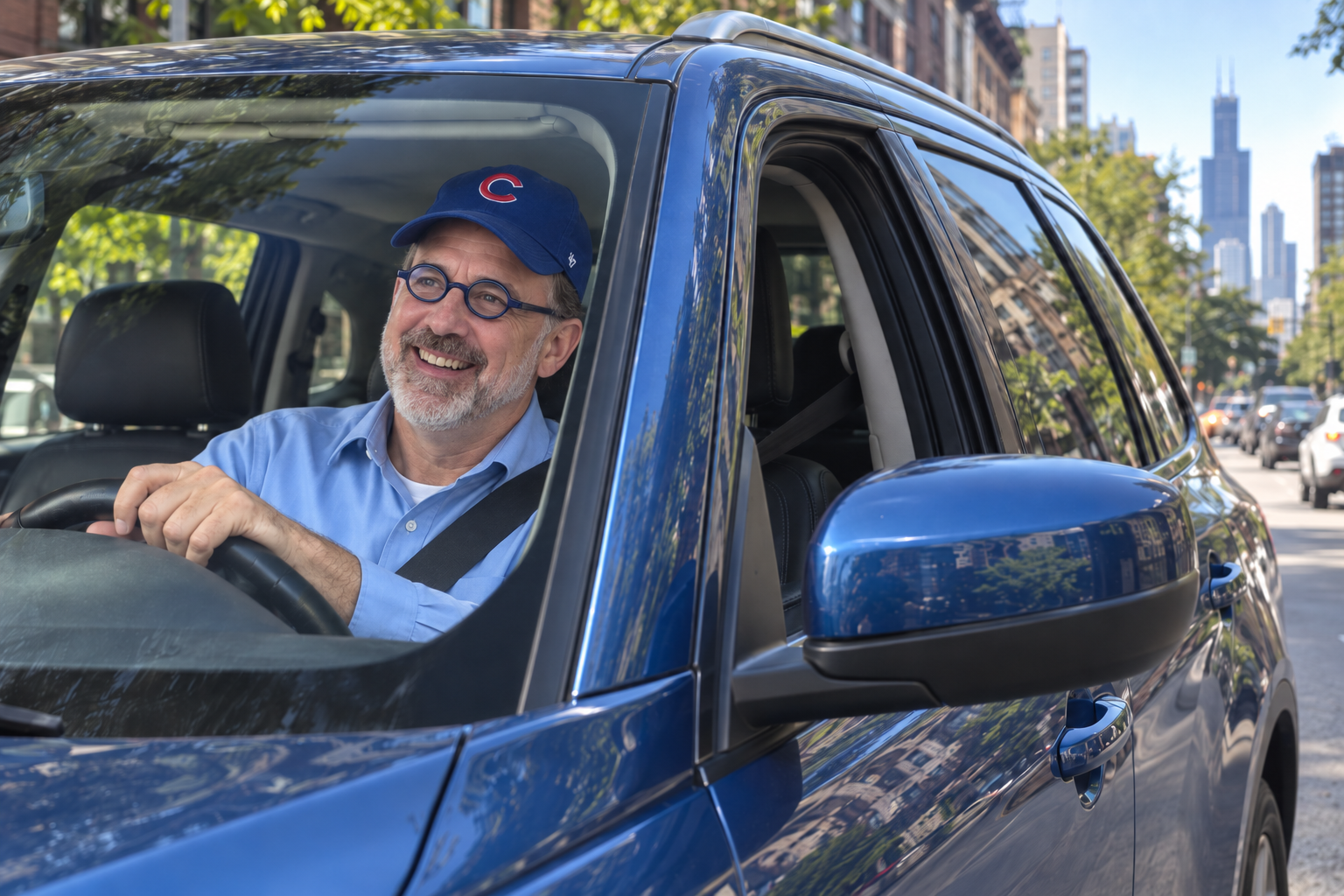
Illustration: Driving for Uber in 2017 gave me a different reason to wonder what happens after a technology becomes indispensable.
That is where my own history with American technology companies made me suspicious. I drove for Uber in 2017. At the time, I received 85 percent of the fare. That arrangement made sense to me. Uber created the marketplace and brought me the passenger; I supplied the car, gas, maintenance, and labor. Years later, Len Sherman at Columbia Business School examined the trip histories of three veteran Uber drivers and found that all three had started with drivers receiving roughly 80 to 85 percent of rider fares. By 2026, Uber’s share of what riders paid had risen above 50 percent in all three cases. It is a small case study, not a national estimate, but the trajectory felt familiar to me. I had seen a version of this story before. Make the new thing cheap enough and useful enough that people reorganize their lives around it. Then figure out what they are willing to pay once they have. That did not mean Meituan was destined to follow the same path, but I could feel myself expecting it. You know, as an American?
Where is the other shoe? When do the discounts disappear? When does ten-minute delivery become something expensive enough that I stop using it? And maybe that expectation is itself worth examining.
I had gone to China assuming that convenience naturally came with a premium. Faster costs more. Delivery costs more. Having somebody—or eventually something—do part of my day for me costs more. But that was not the relationship I was experiencing. I do not know yet whether China has developed a better economic model for delivery, whether I happened to arrive during an unusually competitive period, or whether some of the cost I could not see was simply being absorbed somewhere else in the system. Probably some combination of all three. What I do know is that a cup of coffee forced me to notice an assumption I had carried into China without knowing it was an assumption at all.
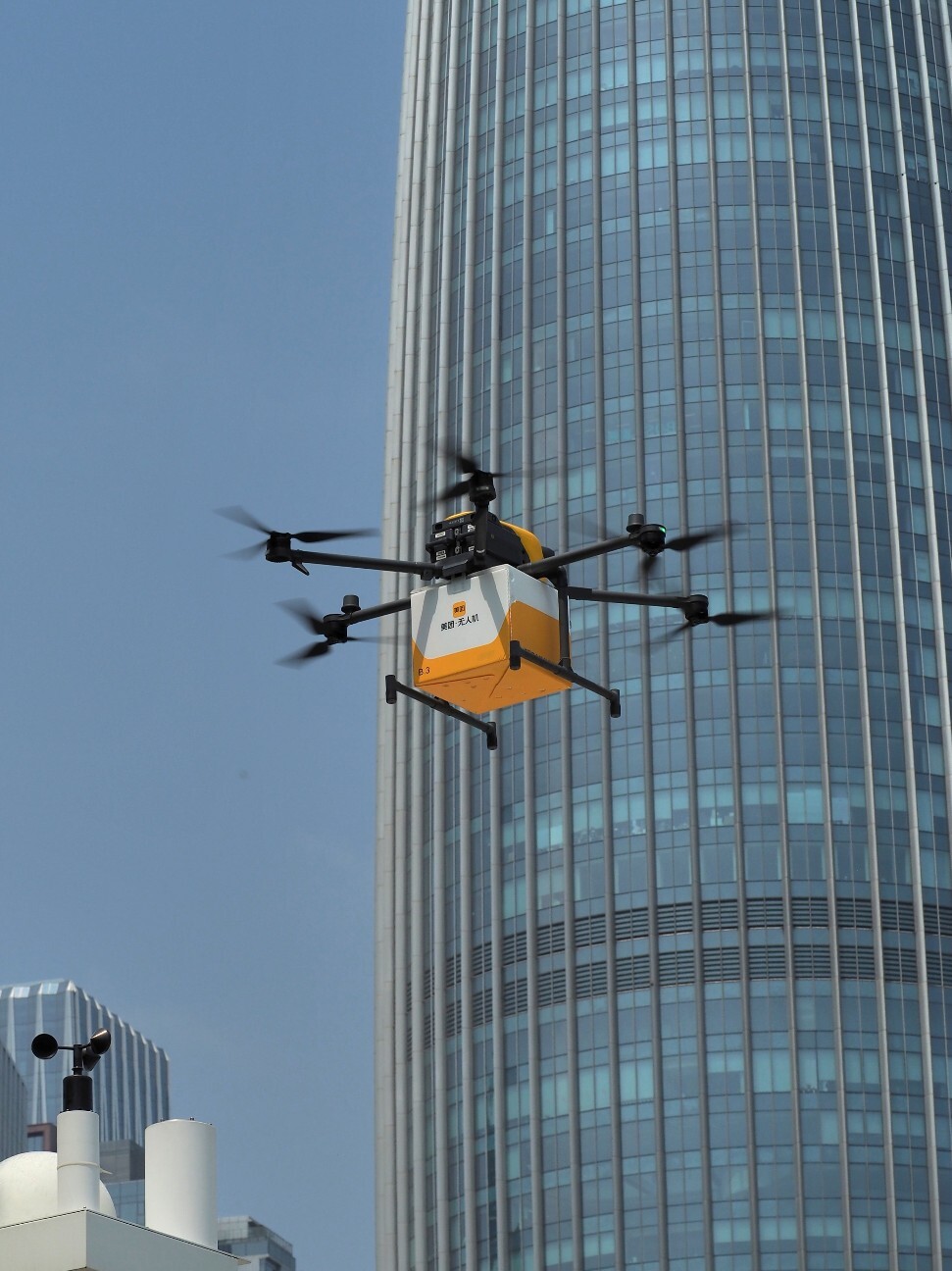
By then, the next stage of delivery was already visible overhead.
Why had I come to believe that making my life easier should always cost me more? And I hadn’t even had anything delivered by drone yet.
THE QUESTION I CARRIED HOME Why had I come to believe that making my life easier should always cost me more? |
JOIN THE DISCUSSION
When did convenience become something you expected to pay extra for? What hidden costs do you assume are behind a service that feels too cheap?
BIBLIOGRAPHY
Pegoraro, Rob. “Uber Driver Pay Is Falling as the Company’s Take Rate Rises, New Research Finds.” Fast Company, June 23, 2026.
https://www.fastcompany.com/91562964/uber-driver-pay-is-falling-as-the-companys-take-rate-rises-new-research-finds
Reuters. “Chinese E-Commerce Moves to Next Phase after Delivery Price War Changes Shopping Habits.” September 3, 2026.
https://www.reuters.com/business/retail-consumer/chinese-e-commerce-moves-next-phase-after-delivery-price-war-changes-shopping-2026-09-03/
Sherman, Len. “Uber’s Long and Winding Road to 50% Take Rates.” Medium, June 10, 2026.
https://len-sherman.medium.com/ubers-long-and-winding-road-to-50-take-rates-1aaf4a574ae0